A Film Casino Is a Setting, Not a Visitor Map
A film casino is a setting, not a visitor map: learn to read its lights, layout and language as choices that shape mood and plot, not directions.
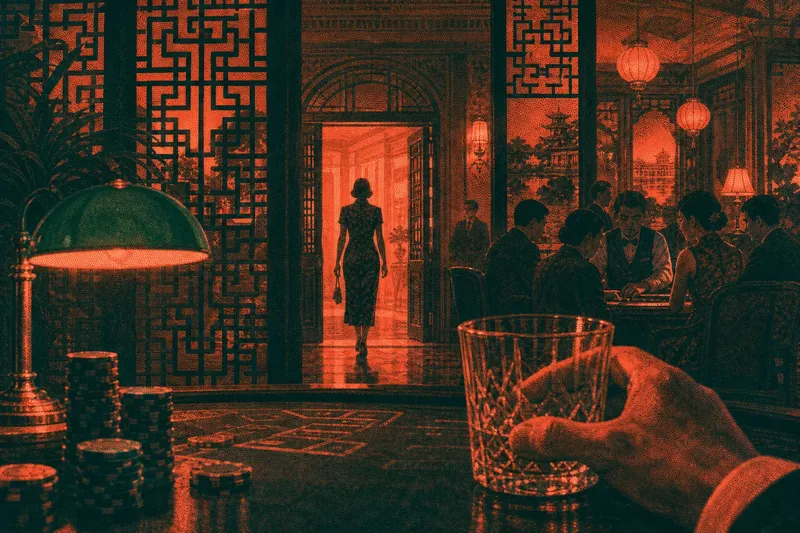
In a film set in Huế, a character crosses a dim casino room while a bright doorway glows behind her. The camera lingers on the doorway, then cuts to a close view of a hand tightening around a glass. A film casino is a setting, not a visitor map: its layout and details are arranged to guide the viewer’s attention, not to explain how a real venue works.
That distinction matters when screen imagery borrows the look of a casino in a culturally specific place. A cinematic room may combine familiar gaming tables with invented architecture, selective local references and dramatic lighting. Reading those choices as storytelling keeps the scene legible without mistaking it for visitor information.
What does the room make you feel first?
Begin with the mood. Ask whether the casino seems welcoming, secretive, oppressive or exhilarating before trying to identify its features. Production design—the deliberate arrangement of sets, objects, colour and light—often establishes that feeling before a character speaks.
Notice which parts of the room are visible and which disappear into shadow. A broad, clear view can suggest openness, while narrow sightlines and partially hidden entrances can make the same space feel watchful. These effects do not describe a venue’s actual access, layout or atmosphere; they tell you how the film wants you to experience a moment.
Colour also carries dramatic weight. Warm gold may make a room appear inviting or overly lavish; a cooler palette can make it feel distant. Neither colour scheme is a neutral record. It is a visual choice, and its meaning depends on the scene and what the characters are doing.
How does the camera turn design into plot?
A film casino is not only scenery. Its arrangement can help a story unfold. The camera may frame a character between table lamps, follow someone through a crowded passage, or hold back a view until a revealing moment. Each choice directs attention and shapes what the audience knows.
Try separating three things as you watch:
- The room: What objects, colours and boundaries have been placed in view?
- The camera: Where does it stand, and what does it withhold?
- The characters: Who appears comfortable, conspicuous or out of place?
When these elements work together, a table or doorway can become part of the action. A character’s hesitation beside an entrance may matter more than the entrance’s architectural appearance. The scene is using space to make a choice visible, not providing a route for a visitor to follow.
What questions help read a casino scene?
Why does the camera linger on a doorway?
A doorway can signal escape, arrival or a possible interruption. If the film repeatedly returns to it, watch what changes in the characters’ behaviour when it enters the frame.
What does a crowded table communicate?
Crowding can create pressure, spectacle or a sense that a character has little room to act. The impression comes from framing, movement and performance together, not from the number of people alone.
Are local architectural details evidence of a real casino?
Not by themselves. A film might borrow a pattern, material or architectural suggestion, then combine it with sets or images chosen for the story; visual resemblance does not establish a real location or venue layout.
How can I tell when a casino is mostly symbolic?
Look for details that recur when a character faces a decision, such as a reflective surface or a sharply lit threshold. If the room’s visual features echo the character’s conflict, they may be functioning as motifs rather than practical information.
How should Huế’s cultural setting affect your reading?
A casino scene placed in Huế can invite the audience to connect leisure, tourism and local identity. But a film’s version of the city may be selective: a few recognisable cues can stand in for a much more varied place. Treat those cues as part of the film’s representation, not as a complete picture of local life.
Ask whose perspective the scene centres. Does it show residents as people with distinct aims, or use the city mainly as an atmospheric backdrop for visitors? Does the setting have a role in the story beyond lending it an exotic or historic appearance? These questions help identify what the film includes, simplifies or leaves out.
It is not worth trying to infer a real casino’s services, access arrangements or visitor rules from a dramatic scene. Those details belong to reliable venue information, not to a camera’s selective view. For screen analysis, the more useful question is what the scene’s chosen details make the audience expect.
What changes when you follow one invented scene?
Say you are watching an invented film scene in a fictional Huế casino. A character enters a room where patterned screens divide the space, a green lamp casts a pool of light over one table, and a quiet corridor remains visible behind the guests. The camera first holds on the screens, then shifts to the character’s face as she notices someone in the corridor.
At the start, the patterned screens suggest partial concealment. The lamp isolates the table as a place of decision, while the corridor creates a question about who may arrive. When the camera changes focus from the room to the character, the scene’s emphasis becomes clear: these details matter because they shape her suspicion, not because they map the building.
Suppose the next cut shows her leaving by a door that was never visible earlier. That edit would further weaken any attempt to reconstruct the room’s practical layout. Yet it could sharpen the plot by making her departure feel sudden, or by revealing that the film has withheld information on purpose.
The useful lesson is to track the scene’s progression: what the film shows first, what it hides, and which details return as the character’s situation changes. In this invented case, the screens, lamp and corridor form a visual pattern around uncertainty. The expected effect is a viewer who shares the character’s unease, not a viewer who can find the table on a real floor plan.
How can you keep screen design separate from visitor information?
Use a simple distinction as you watch: film details explain the scene; venue details help someone make a real visit. A camera angle may make a space look open when the set is only a partial construction. A prop sign may be decorative, and a dramatic entrance may not correspond to any actual building feature.
For Huế, this separation also protects the cultural reading. A fictional casino can borrow local textures and still tell a story shaped by outside assumptions. Notice the borrowing, consider what role it gives the setting, and avoid treating a designed image as a guide to the city.
Reading a film casino as a setting rather than a visitor map makes its design easier to discuss precisely. The next time a scene catches your attention, follow the light, the camera and the characters’ choices; those are the clues to the story, while practical questions about a real venue belong to a different source.